
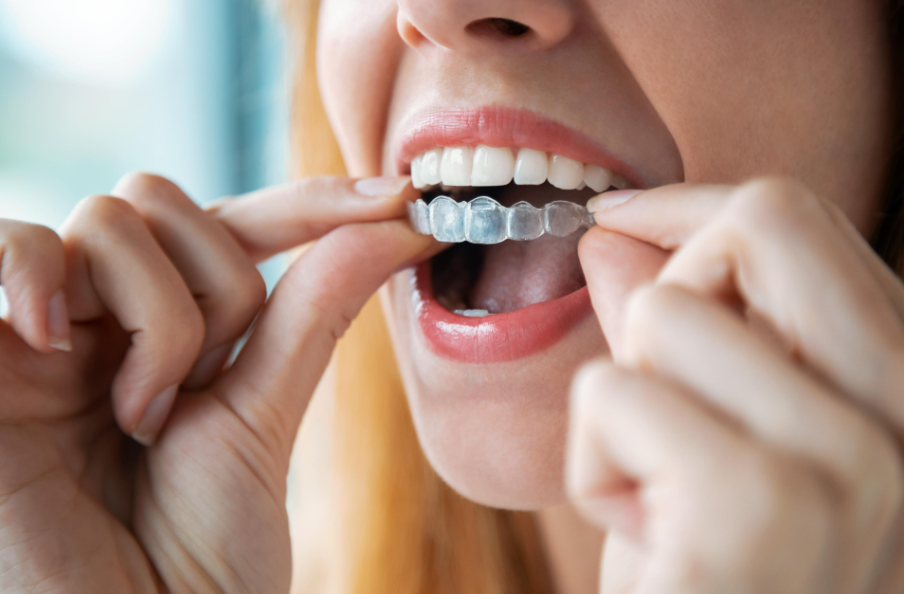
Chipped front teeth are not always caused by an accident or biting something hard. In some cases, the way the upper and lower teeth meet may place repeated pressure on certain teeth. If the bite is uneven, front teeth may experience more contact than intended during chewing or clenching. Clear aligner treatment may help address some bite concerns, but whether it is appropriate depends on the cause and severity of the problem.
How Can a Bad Bite Contribute to Chipping?
A healthy bite involves interaction between the upper and lower teeth during chewing and other jaw movements. When teeth meet in an unfavourable position, certain areas may receive greater pressure.
Over time, repeated contact may contribute to enamel wear, small chips, sensitivity, or damage to existing dental restorations. Teeth grinding or clenching may also increase the forces placed on the front teeth.
A chipped tooth therefore deserves more than a cosmetic assessment. A dentist may examine the tooth, bite, gums, and surrounding structures to determine whether an underlying factor is contributing to the damage.
Can Clear Aligners Change the Bite?
Clear aligners are designed to gradually move teeth according to an individualized treatment plan. In appropriate cases, this movement may improve certain forms of crowding, spacing, or bite irregularities.
However, clear aligners are not suitable for every bite problem. The type of bite issue, tooth position, jaw relationship, available space, existing restorations, and overall oral health all influence treatment planning.
Someone considering Invisalign in Windsor may therefore need a detailed assessment before treatment begins. The goal should not simply be to straighten visible teeth. The dentist should also consider how the teeth contact each other and whether the planned movements are appropriate for the patient’s circumstances.
What Happens to the Chipped Teeth?
Aligning the teeth does not automatically repair enamel that has already been lost. If a front tooth is chipped, the dentist may discuss a separate treatment depending on the extent of the damage.
A minor chip may sometimes be managed with observation or a restorative procedure such as composite bonding. More significant damage may require another form of restoration. The appropriate choice depends on the condition of the tooth and the amount of structure affected.
In some cases, addressing the bite first or as part of a broader treatment plan may help reduce excessive contact. However, treatment should be based on an individual examination rather than assuming that alignment is the sole cause of the chipping.
Why a Dental Assessment Matters
Before starting clear aligner treatment, a dentist may review your dental history, examine your teeth and gums, assess your bite, and determine whether any existing dental concerns need attention.
A dentist in Windsor can also discuss expected results, limitations, alternatives, potential risks, and maintenance requirements. Informed consent is an important part of dental care. Patients should have enough relevant information to understand their proposed treatment and make their own decision.
If sedation or general anesthesia is being considered for any dental procedure, additional safety requirements and risk discussions apply under RCDSO standards.
Discuss Your Bite and Chipped Teeth With Dental House LaSalle!
If chipped front teeth may be connected to the way your teeth meet, Dental House LaSalle can assess your bite and discuss treatment options based on your individual dental needs. Understanding the cause of the problem may help you make a more informed decision about future care.